
Sequenced CAR-Technology
SequencedCAR™ Platform
Precision In-Vivo CAR-T Engineering Through Programmable Two-Step Delivery
The Problem
Engineering regulatory T cells alongside effector T cells risks undermining the very immune response the therapy is designed to activate. Without cell-type selectivity, in-vivo CAR-T remains a promising concept constrained by an unresolved safety and efficacy concern.
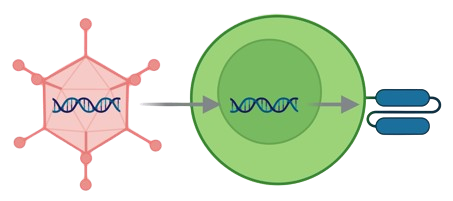
Engineering regulatory T cells alongside effector T cells risks undermining the very immune response the therapy is designed to activate. Without cell-type selectivity, in-vivo CAR-T remains a promising concept constrained by an unresolved safety and efficacy concern.
Our Approach
SequencedCAR™ is a proprietary two-infusion system that generates CAR-T cells inside the patient's body with a level of cell-type precision not achievable by single-vector approaches.
The first infusion delivers a non-integrating genetic construct designed to selectively mark only effector T cells. This step does not permanently modify the genome and does not affect regulatory T cells.
The result is a system where only the intended cell population receives the CAR construct, and where gene expression is linked to the T cell’s activation state — reducing the risks of tonic signalling and premature exhaustion that limit current approaches.
Key Platform Features
Effector T Cell Selectivity
Designed to engineer only effector T cells while leaving regulatory T cells unmodified — addressing a core safety limitation of current in-vivo CAR-T strategies.
Non-Integrating First Step
The initial construct does not integrate into the genome, confining permanent genetic modification to the precisely targeted second infusion.
Modular Second Infusion
The anchor-based recognition system allows the same first infusion to be paired with different second infusions carrying different CAR constructs — one preparation step, multiple therapeutic targets.
Activation-Responsive Expression
CAR gene expression is coupled to T cell activation, reducing off-target activity and mitigating the chronic signalling that drives T cell exhaustion.
Platform Scalability
Eliminates the need for ex vivo manufacturing, leukapheresis, and patient-specific production — enabling a pathway toward off-the-shelf in-vivo CAR-T therapy.

Clinical Potential & Pipeline Application
SequencedCAR™ forms the delivery backbone for Endurion’s lead pipeline programmes, including GX-01 (Ariflex™, Anti-CD19 CAR-T) and GX-02 (Anti-BCMA CAR-T). The modular architecture of the platform is designed to support rapid expansion into additional antigen targets without requiring fundamental changes to the delivery system.